


Why Do Welds Crack on Trailers and Gates? Common Causes and How to Prevent Repeat Failures

Welds on trailers and gates live a hard life: vibration, twisting, weather, and repeated movement all concentrate stress around joints. Most cracks aren’t “mysteries”—they show up where cyclic loads, misalignment, corrosion, or weld imperfections create the perfect starting point. This guide explains the most common crack patterns and the prevention steps that reduce repeats after a repair.
If you’re trying to route a project to the right type of help (mobile welding vs other fixes), start with the service overview.
What’s the most common reason welds crack on trailers and gates?
The most common reason is fatigue: small stresses repeated thousands of times cause microscopic cracks to start (often at the weld edge) and grow until they become visible. Fatigue cracks in welded components often initiate early at existing flaws and spend most of their life propagating, see TWI Global – What Is Fatigue Failure and How Can It Be Avoided?
On trailers, fatigue is usually driven by road vibration and frame flex. On gates, it’s driven by repetitive swinging plus hinge misalignment, sag, and occasional impacts.
Where do cracks usually start on a weld (and why there)?
Cracks commonly start at the weld toe (the edge where the weld meets the base metal) because that transition can act like a stress “amplifier,” especially if the profile is sharp or imperfect. Weld imperfections such as undercut, lack of fusion, or poor joint fit-up can increase stress concentrations and significantly raise the likelihood of cracking. See “Understanding Weld Cracking: Causes, Consequences, and Remedies” from Hobart Brothers.
For homeowners, the practical takeaway is: cracks often show up right at the edge of the weld and then run into the parent metal.
Why do trailer welds crack more often in certain spots?
Trailer cracks show up most where the frame experiences repeated flex or concentrated loads. Those areas tend to share one thing: loads that change over time (bumps, braking, uneven terrain) and structural details that focus stress into a small region.
Common “high-cyclic-stress” locations include:
- Crossmember-to-rail joints
- Ramp hinges and hinge brackets
- Jack mounts and coupler-area attachments
- Tie-down points or add-on brackets welded to a main rail
When a trailer is used near its limit, or loads aren’t well distributed, those cycles become more intense—and cracks appear sooner.

Why do gate welds crack around hinges and latch areas?
Gate welds crack most often because the gate stops moving smoothly, which turns normal swing loads into twisting and prying loads. Misalignment makes hinges bind, and binding raises stress at the hinge welds and nearby brackets.
Typical gate drivers include:
- A post that’s leaning (even slightly)
- A gate that has sagged and now drags
- A latch that’s forcing the gate into position each close
- Slamming the gate shut (repeated impact)
The pattern is predictable: the more force it takes to open/close, the more stress the welds see at the hinge and latch attachments.
Which causes are most likely based on what you can see?
Use this table to match visible clues to likely causes and the prevention step that actually reduces repeat cracking.
| What you notice | Likely cause category | Why it creates cracking | Prevention focus that helps most |
|---|---|---|---|
| Crack starts at weld edge and grows into base metal | Fatigue + stress concentration | Repeated cycles focus stress at the weld transition | Reduce flex/vibration; improve support; avoid concentrated loads |
| Crack appears near a bracket that sticks out from a rail/post | Attachment detail stress riser | Load is funneled through a small welded attachment | Add reinforcement or gusseting; spread the load path |
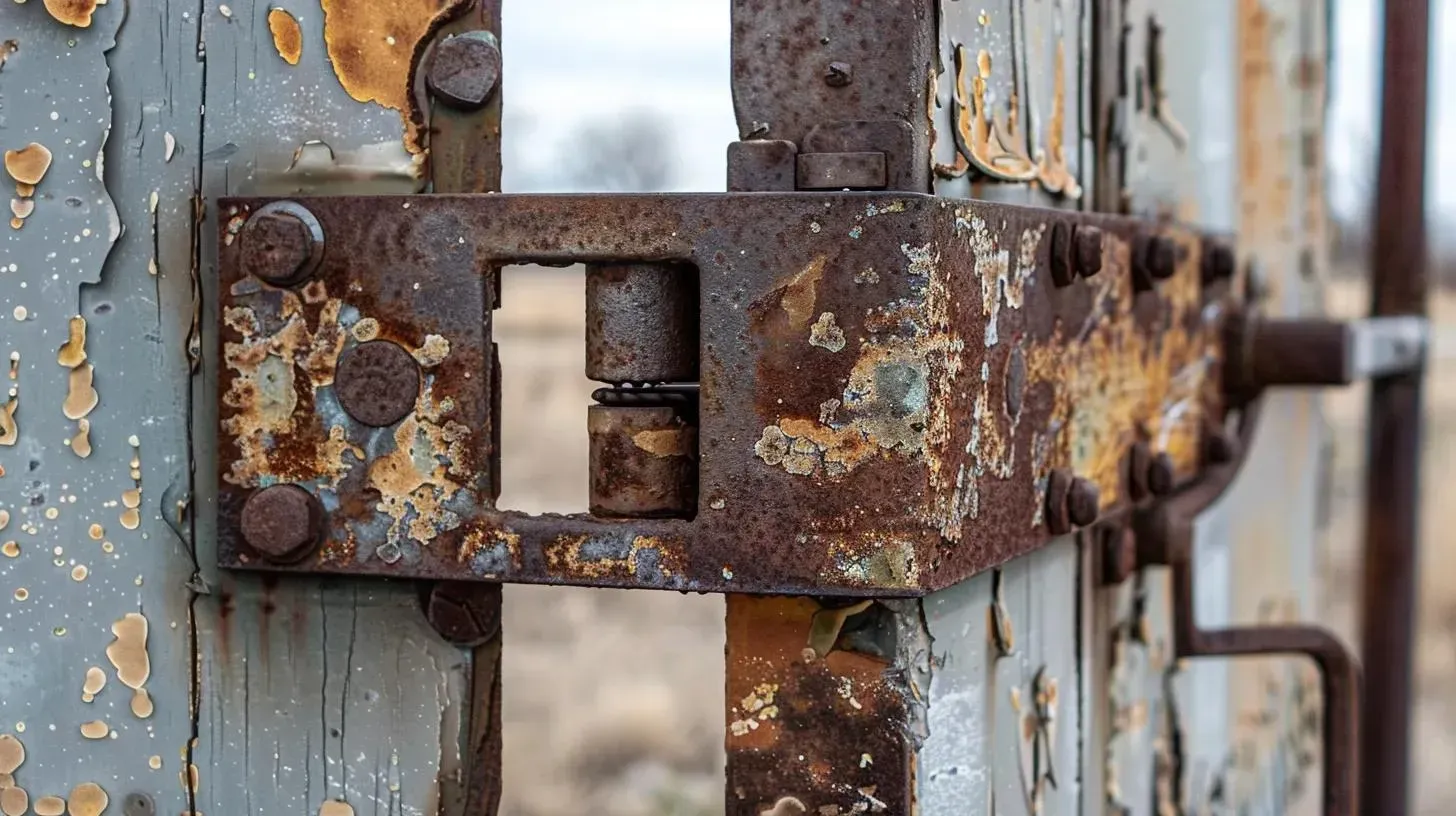
| Cracking near rust, pitting, or flaking paint | Corrosion-assisted cracking | Thinning metal and surface pits create weak initiation sites | Clean and coat; prevent water traps; maintain finishes |
| Crack near a joint that doesn’t sit flush | Fit-up / fusion risk | Gaps and weak bonding act like a starter notch | Improve joint prep and fit; ensure proper fusion during repair |
| Hinge-area cracks plus the gate is hard to move | Misalignment / binding | Movement force becomes twisting at the hinge bracket | Re-align gate or post; restore smooth swing; add proper stops |
What can you do to prevent the same weld from cracking again?
Repeat prevention is about removing the stress source—not just “making the weld bigger.” If the joint is being forced to flex or twist on every use, it will eventually find the next weakest spot.
Prevention checklist (homeowner-friendly)
- Keep trailer loads balanced so one corner isn’t doing all the work.
- Reduce shock loading: secure cargo so it can’t slam or shift.
- Avoid “add-on” brackets that concentrate load into a tiny weld area.
- Keep water from sitting in crevices; touch up coatings where paint has chipped.
- For gates, restore smooth movement: fix sag, binding hinges, and latch misalignment.
- Add or adjust stops so the gate isn’t slamming into its end position.
- Re-check hardware (hinge bolts, mounts, fasteners) so the weld isn’t carrying avoidable movement.
If you want the work handled on-site, MS FixIt’s mobile welding service page gives the general scope of what can be repaired in place.
Common mistakes / red flags that lead to repeat cracking
The fastest way to “re-break” a weld is to fix the visible crack but leave the loading pattern unchanged.
- Treating the crack as the problem instead of the stress source (flex, twist, binding)
- Adding weight or longer extensions to a bracket without adding support
- Painting over early crack lines and rust “weeping” without addressing corrosion or movement
- Letting a gate keep dragging or forcing it shut against a misaligned latch
- Repeated impacts (slamming ramps/gates) that turn normal loads into shock loads

Two realistic examples (how cracks happen in the real world)
Example 1:
Utility trailer ramp hinge crack that keeps returning
A ramp hinge weld cracks, gets repaired, andthen cracks again a few months later. The underlying issue is that the ramp closes with a hard slam and the hinge area takes repeated impact plus vibration during transport. Once the slam and movement are controlled (proper stops, smoother close, reduced shock), the repair has a better chance of lasting.
Example 2: Gate hinge bracket crack after a winter of “sticking”
A gate starts sticking because the post shifts slightly and the latch no longer lines up. Every close becomes a forced shove that twists the hinge side, and the hinge bracket weld eventually cracks. The durable prevention step is restoring smooth alignment so the gate isn’t using the weld as a lever.
If you’re seeing recurring cracks, include a wide photo that shows the full setup (trailer area or gate/post alignment) along with the close-up crack—those context shots are what usually reveal the real stress source. You can send them through Contact page.
Frequently Asked Questions
Why do cracks often start at the edge of the weld?
Because the weld-to-base-metal transition is where stress concentrates, especially under repeated loading. Small profile imperfections or bonding issues can make that edge the easiest place for fatigue to start.
Can corrosion actually cause a weld to crack, or does it just reveal an existing crack?
Both can be true. Corrosion can thin metal and create pits that act like crack starters, and it can also make existing crack lines more visible through flaking paint or rust staining.
What’s the single best “prevention move” for gates?
Make the gate swing and latch smoothly again. When a gate binds or has to be forced shut, the hinge and latch welds see twisting loads they were never meant to carry.
Next step
To route your request to the right service and see what MS FixIt handles across welding and repair work, start here: “MS FixIt – Services”.