


Why Is My Gate Sagging? How to Tell if It’s Hinges, the Frame, or the Post

A sagging gate usually shows up the same way: the latch-side bottom corner drops, the gate starts dragging, or the latch misses unless you lift it. The harder part is figuring out why it’s happening, because the real cause is not always the gate itself. In most cases, the problem comes from one of three places: the hinges and hardware, the gate frame, or the hinge-side post.
This guide is for standard fence, side-yard, and entry gates where the question is diagnosis first. The goal is to help you tell whether you’re dealing with loose hardware, a gate that has gone out of square, or a post that has shifted enough to throw the whole opening out of alignment.
If you want us to confirm what’s failing and correct the root cause, our fence, gate, and railing repair page is the best place to start.
What does gate sag usually look like?
A sagging gate usually announces itself through alignment changes before anything fully fails. The latch-side bottom corner drops first, the top gap tightens, and the gate starts dragging on the ground or rubbing the latch side of the opening.
That pattern matters because it gives you clues about where the movement started. If the panel shape has changed, the frame may be out of square. If the whole opening feels skewed, the post may be moving. If the gate still looks square but has simply dropped, the hinges or their fastening points are often the first place to inspect.
How can you tell if the hinges are the problem?
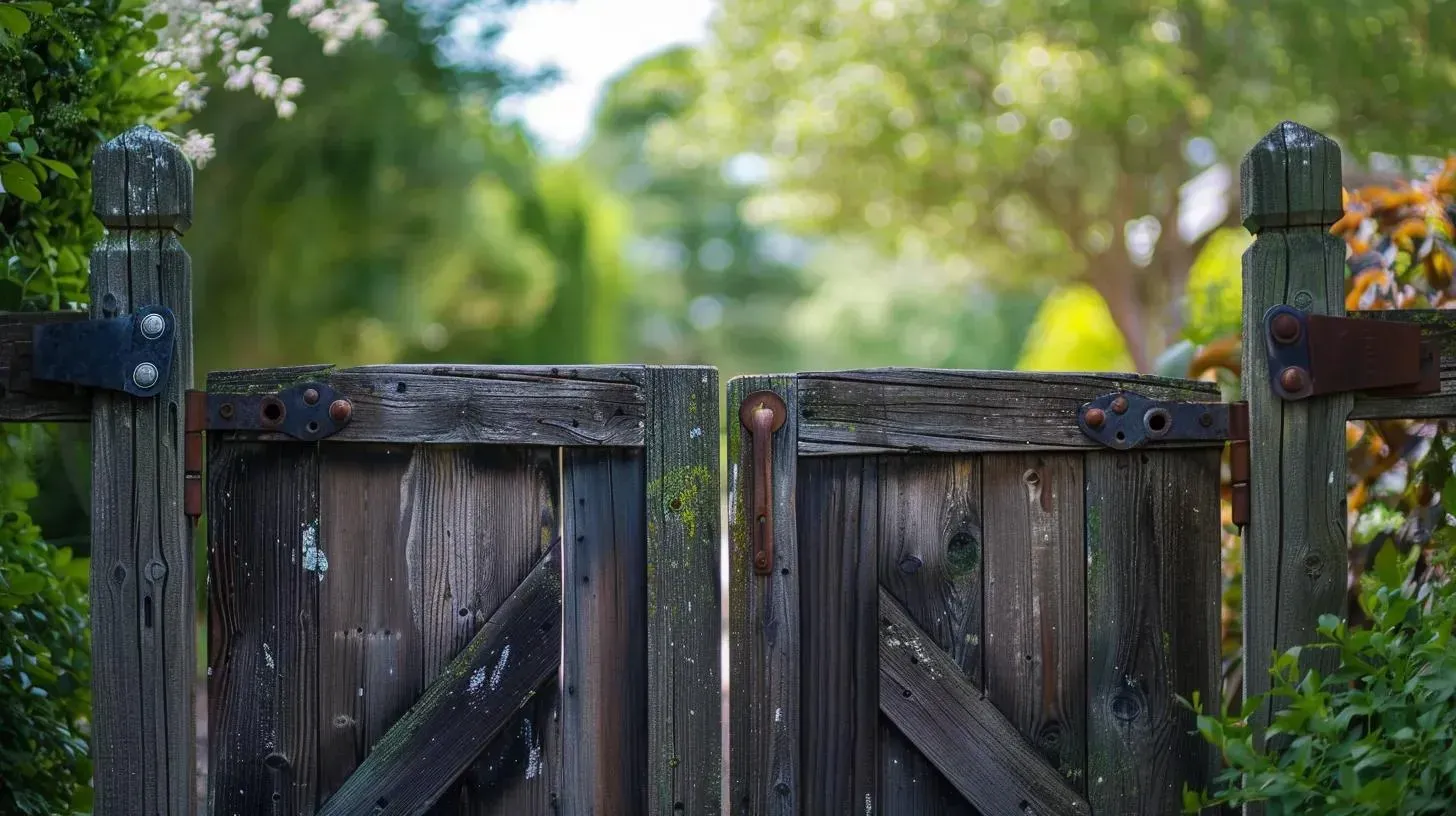
If the gate still looks mostly square and the post still looks straight, hinge issues are often the leading suspect. The most common hinge-related signs are loose screws or bolts, rusted hardware, bent hinge leaves, worn pins, or visible play where the hinge connects to the gate or post.
A hinge problem often shows up as a steady drop on the latch side without major distortion in the gate frame. You may also notice squeaking, grinding, or a slight wobble when you lift the latch side by hand. If the gate rises temporarily when you tighten or support it, but the opening itself still looks even, that points more toward hardware support than a structural post issue.
Another clue is where the movement happens. If the gate shifts at the hinge line when you push up or down on the free end, the hardware or its fastening points are likely giving way. That is different from a post problem, where the whole hinge side tends to lean or move as one unit.

How can you tell if the gate frame is out of square?
If the gate itself has turned from a rectangle into more of a parallelogram, the frame is likely the problem. That usually happens when the joints loosen, the frame warps, or the diagonal support is missing, ineffective, or installed in the wrong direction.
A fast way to check is to compare the diagonals from corner to corner. When those measurements are different, the panel is out of square. Visually, you may see the latch-side top corner pulled inward or the latch-side bottom corner dropped, even though the hinge post still appears plumb.
Brace direction also matters on many wood gates. A brace that helps resist sag typically carries load back toward the hinge side. When the frame is underbuilt, the joints loosen, or the support pattern is wrong for the load, the gate gradually racks out of shape instead of staying rigid.
How can you tell if the post is the real problem?
A gate post can move only a little and still create a very noticeable sag at the far end of the gate. That is why a post problem often fools people into blaming the gate panel or the hinges first.
Look at the hinge-side post from both directions and compare it to nearby fence lines, trim, or a level if you have one. If it leans, twists, rocks at the base, or looks worse after winter, rain, or seasonal ground change, the post is often the real source of the misalignment. A heavy gate magnifies even small post movement.
The visual pattern is also different. When the post is the problem, the entire opening can look skewed rather than just the gate panel. Gaps may change seasonally, the latch may miss even though the hardware looks intact, and forcing the gate shut may make the problem worse over time.
This is paragraph text. Click it or hit the Manage Text button to change the font, color, size, format, and more. To set up site-wide paragraph and title styles, go to Site Theme.
| What you notice | Most likely cause | What to check next | Prevention focus |
|---|---|---|---|
| Latch-side bottom corner drops, but the gate still looks square and the post looks straight | Hinges or hinge fasteners | Loose screws, rust, bent hinge leaves, movement at hinge connection | Use hardware sized for the gate weight and re-check fasteners before they loosen further |
| Top gap closes, bottom gap widens, and the gate looks like it has 'racked' | Gate frame out of square | Corner joints, diagonal measurements, brace condition and direction | Keep the frame rigid with proper bracing and don’t let minor looseness turn into frame distortion |
| Whole opening looks skewed, especially after winter or wet/dry swings | Post movement or lean | Post plumb, base movement, footing condition, nearby fence alignment | Stabilize post movement early before the gate starts loading the opening unevenly |
| Gate drags only after landscaping, gravel buildup, or surface changes | Clearance issue rather than true structural sag | Ground clearance under the swing path and any grade changes | Keep clearance consistent and avoid mistaking a grade problem for a hinge problem |
| Metal gate sags near a hinge bracket or welded connection | Hinge-side connection failure | Cracked bracket, movement at weld, hardware stretch or pull-out | Correct the connection issue before repeated use enlarges the failure point |

What quick inspection gives the clearest answer?
The fastest diagnosis is usually a simple comparison: check the post, check the gate shape, then check the hardware. That order helps you avoid adjusting a latch or replacing hinges when the real issue is the frame or the post.
5-minute sagging gate checklist
- Stand back and look at the full opening, not just the dragging corner.
- Check whether the hinge-side post looks plumb or slightly leaned.
- Lift the latch side gently and watch for movement at the hinges.
- Compare the diagonal measurements of the gate frame from corner to corner.
- Look for rust, bent hardware, stripped fasteners, or cracked hinge brackets.
- Check whether the ground or driveway under the swing path has changed height.
- Notice whether the problem is constant or gets worse after weather changes.
If those checks point in different directions, treat the post and frame as higher-priority suspects than the latch. Latches usually reveal sag; they rarely cause it.
What usually makes a gate sag again after it’s corrected?
A gate usually sags again when the visible symptom gets corrected but the load path does not. Tightening hardware helps if the hinges were truly the only problem, but sag returns fast when a heavy gate is still pulling on a weak frame or a shifting post.
Recurring sag often comes from the same patterns: undersized hinges, a frame that was never rigid enough, a brace that is not supporting the load well, or a post that keeps moving with the ground. Frequent slamming, dragging, and forcing the latch also add stress that speeds the problem up.
You can review real before-and-after gate repairs and reinforcements in our portfolio here.
Common mistakes and red flags
A lot of homeowners lose time by trying to “fine tune” the wrong part of the gate. The biggest mistake is treating a latch miss as a latch problem when the gate has actually dropped or the opening has shifted.
Red flags to take seriously include a post that rocks when pushed, a gate frame that no longer measures square, hinge screws that no longer hold tightly, and a sag that gets worse after weather swings. Another common mistake is forcing the gate shut for weeks or months, which can turn a minor alignment issue into damaged hardware, cracked joints, or a failed hinge bracket.
If the gate is heavy, the post lean is visible, or the hinge area shows cracking or movement, it is usually smarter to stop guessing and correct the root cause before the gate damages the post, latch side, or surrounding fence section.
Two real-world examples
Example 1: The issue is the hinges. A side-yard wood gate starts dragging at the latch-side bottom corner, but the hinge post still looks straight and the gate frame still measures square. When the free end is lifted, the movement shows up right at the top hinge and the screws feel loose. In that situation, the hardware is the primary suspect, not the gate frame.
Example 2: The issue is the post. A metal gate worked fine for months, then started missing the latch after winter. The hinges still look intact, but the hinge-side post is slightly out of plumb and the gap pattern across the opening has changed. That usually points to post movement first, with the gate simply showing the symptom at the far corner.
Frequently Asked Questions
Does a dragging gate always mean bad hinges?
No. Dragging tells you the gate has dropped or the clearance has changed, but it does not prove the hinges are the root cause. A post lean, a racked frame, or even a changed ground surface can create the same symptom.
Can a gate sag even if the hinges look fine?
Yes. A gate can sag because the frame has gone out of square or because the hinge-side post has shifted enough to change the opening. Hinges may still look intact while the real movement is happening somewhere else.
Why does a gate seem worse after winter or wet weather?
Seasonal changes often expose post movement, moisture-related wood movement, or subtle footing problems that were less obvious in dry or stable conditions. A gate is a long lever, so small changes at the hinge side become easy to see at the latch side.
Next step
If your gate is sagging, dragging, or refusing to latch cleanly, the fastest way to solve it is to identify the real failure point instead of adjusting parts at random. For gate alignment, hinge and latch fixes, reinforcement, and post-related repairs across Northern Colorado, start here: Fence-Gate-Railing-Repair